













Sustainability
Social
- TOP
- Sustainability
- Social
Improvement of Quality and Service
In order to respond speedily to diversifying markets and increasingly sophisticated customer demands, we are working to strengthen our integrated supply chain, from raw material procurement to processing and distribution.
Stable Supply of Products and Quality Assurance System
We are building an optimal processing and sales system through strengthening local sales channels and improving the Group's capital investment and efficiency. In terms of quality assurance, we have established a quality philosophy and are working tirelessly to raise the level of quality assurance for the security and satisfaction of our customers. At our processing centers in Japan and overseas, we are promoting systemization and automation to eliminate human error. In addition, since raising employee awareness is essential to prevent human error in order to prevent human error from order receipt, processing, inspection, and shipment, we conduct quality education using nonconforming cases not only from domestic and overseas group companies, but also from other companies as subjects. In addition, periodic audits are conducted on domestic and overseas Group companies to check and advise on quality assurance. When follow-up is necessary, we continuously check the progress of improvement in order to maintain and improve the level of quality assurance.
Efforts to Improve Customer Satisfaction
Based on the belief that it is important to make proposals at a higher level in response to customer needs, we are focusing on employee education through skills training and other programs. In addition, we select national staff from overseas subsidiaries and overseas offices and conduct group training to improve customer satisfaction not only in Japan but also in other countries.
Creating a workplace environment where employees can work with vitality
We strive to maintain and improve the health of our employees and their families, and to create a safe and secure work environment where employees can work with vitality.
Health and Safety Initiatives
Aiming for zero serious accidents at coil centers and other processing bases, we are working toward the goal of "eliminating unsafe operations that lead to serious accidents. The following activities are being undertaken to achieve this goal: (1) on-site patrols by supervisors and video patrols using the recording function of safety cameras to identify unsafe operations and ensure that each worker performs hazard prediction (KY); (2) examination of similar accidents and hazard simulation training to improve the ability to recognize and avoid unsafe operations; (3) installation of safety sensors to reduce the risk of contact with moving objects and other equipment improvements; and (4) training to improve the safety of workers and the safety of workers. (3) equipment improvements, such as the installation of safety sensors to reduce the risk of contact with moving objects, and (4) awareness of compliance with rules through work training (e.g., crane slinging training) and review of work standards.
In order to share the same values throughout the JFE Shoji Group, we have established a bimonthly meeting of safety officers to share knowledge and information on safety and health with safety officers. In the event of an accident resulting in absence from work, the president of each Group company reports to top management each time an accident occurs, and the entire JFE Shoji Group works together to manage safety and health. In addition, once a year, safety awards are presented to employees to encourage their active participation in safety and health activities. Through these efforts, we will continue to raise the level of safety management throughout the JFE Shoji Group and create a safe and secure workplace environment.
Major Initiatives for 2024
- Continuation of zero serious accidents (zero fatalities since 2018)
- Preventing accidents caused by the five major risks (with a particular focus on preventing accidents caused by moving objects and suspended loads)
- Creation of a workplace with strict adherence to rules (thorough implementation of greetings and pointing and calling out, reconfirmation of training system for new employees and those who have been reassigned)
- Creation of safe work methods and work environment (elimination of similar accidents, safety camera patrols using recording functions)
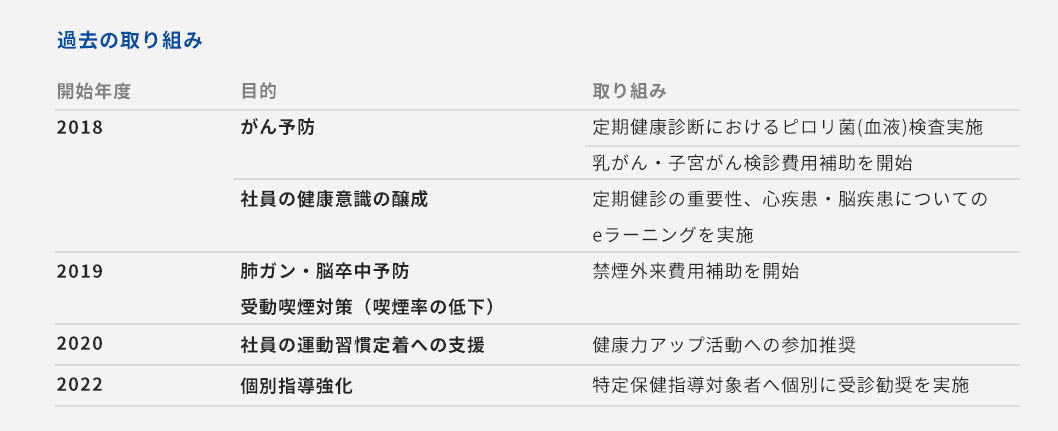
Early detection of illnesses and maintenance and promotion of the health of employees and their families
Initiatives to Support Diverse Work Styles
To achieve work-life balance, we are working to reduce working hours by establishing a regular leave day every Wednesday, prohibiting late-night work after 10:00 p.m., and encouraging employees to take paid vacations.
In April 2016, the flextime system was expanded to include core hours from 11:00 to 14:00, a telecommuting system was introduced for employees with time constraints such as childcare or nursing care, and "Challenge Days" were implemented for employees to utilize telework and shared offices on a trial basis, regardless of whether they have any restrictions. In addition, the company is strengthening its efforts to support diverse work styles.
The Corona Disaster Relief Corporation is operating a flexible system, such as expanding telecommuting eligibility to all employees and tentatively introducing a flexible work schedule with no core hours. In addition, with a view to the after Corona, we have established a project team to study new ways of working, and are aiming to realize even more efficient and flexible ways of working by promoting a paperless work environment through digitization and studying new normal offices.
Business Reform (J-MUSCLE) Activities
JFE Shoji Trade has been engaged in business reform activities since 2008, and on the occasion of its 15th anniversary in 2023, the name of the activities was changed from J-SLIM to J-MUSCLE to promote activities aimed at enhancing the value of operations by strengthening awareness of the need to increase added value in addition to improving operational efficiency. The results of various activities leading to improved productivity are reported at the presentation meeting held every year. In recent years, the entire group has shared effective examples such as reduction of work hours by introducing digital tools, improvement of accuracy and efficiency of paperwork by utilizing data, review of information sharing methods, and efforts to review work methods in cooperation with business partners. We will continue to share these effective case studies with the entire group, and each member can use them as a reference to reform his or her own business operations. We will continue to strive to cultivate a corporate culture that is not bound by preconceived ideas, responds flexibly to changes of the times, and constantly seeks change.
Revitalization of workplaces through small-group activities (J1 activities)
Group companies in Japan are engaged in "J1 activities" as a method suitable for resolving issues such as safety, quality, cost, operation, and delivery time in the manufacturing division, and about 20 teams representing each company report their achievements at the J1 presentation convention held annually, with awards given to the best teams. We will continue to promote J1 activities to energize the workplace and improve problem-solving skills, and the results will be horizontally deployed among group companies.
Initiatives for Diverse Human Resources
We are promoting initiatives to create a corporate culture in which diverse human resources can work in a variety of ways.
Promotion of Diversity
We are conducting diversity seminars for management and diversity management training for managers of group companies. We are also actively working to support women's careers through a mentoring system and next-generation leader training, and in June 2021, we received the "Eruvoshi (3-star)" rating from the Ministry of Health, Labor and Welfare for "excellent implementation of initiatives to promote women's activities". We also hold meetings to exchange information among employees on maternity leave and provide follow-up training after their return to work so that they can continue to play an active role after their life events.
For locally hired employees at overseas bases, we are promoting global human resource development and exchanges, including management training in Japan with the aim of promoting them to senior management positions.
Reemployment system
We are conscious of creating an environment where veteran employees over 60 years old can work with a high level of motivation, while at the same time realizing flexible work styles and creating a healthy work environment. We offer a variety of work options, such as full-time work, shorter working days, and shorter working hours, to suit each individual's lifestyle.
Implementation of training and measures to maximize abilities
In order to expand our trading company business both domestically and internationally, we have prepared training programs that enable personnel with diverse backgrounds to achieve growth in their respective places and situations. We offer "skills training" in which trainees learn the basic skills required of trading company personnel, such as negotiation skills, finance, and strategic thinking, as well as "entry-level training" for career hires. We also offer "overseas trainee training," in which trainees gain hands-on experience in the operations of overseas group companies, and "Japan-based training," in which talented overseas employees are invited to the head office to further enhance their abilities and motivation, with the aim of raising the level of the entire group.
Development of global human resources
In addition to hiring and training foreign career-track employees and overseas local staff, we are strengthening human resource development through practical experience by actively dispatching young employees overseas, in addition to enhancing overseas study and training programs for Japanese employees, which we have been doing for some time.
Main Global Human Resource Development Programs
- Overseas study program
- Short-term overseas language training
- Dispatch of young employees overseas
- Training program for employees at overseas bases
- On-the-job training program in Japan for employees of overseas bases
Social Contribution Activities
In order to contribute to the creation of a prosperous society, we are actively engaged in social contribution activities, aiming to be a corporate group with a clear value in society and the market.
International Education|Donations to West Africa
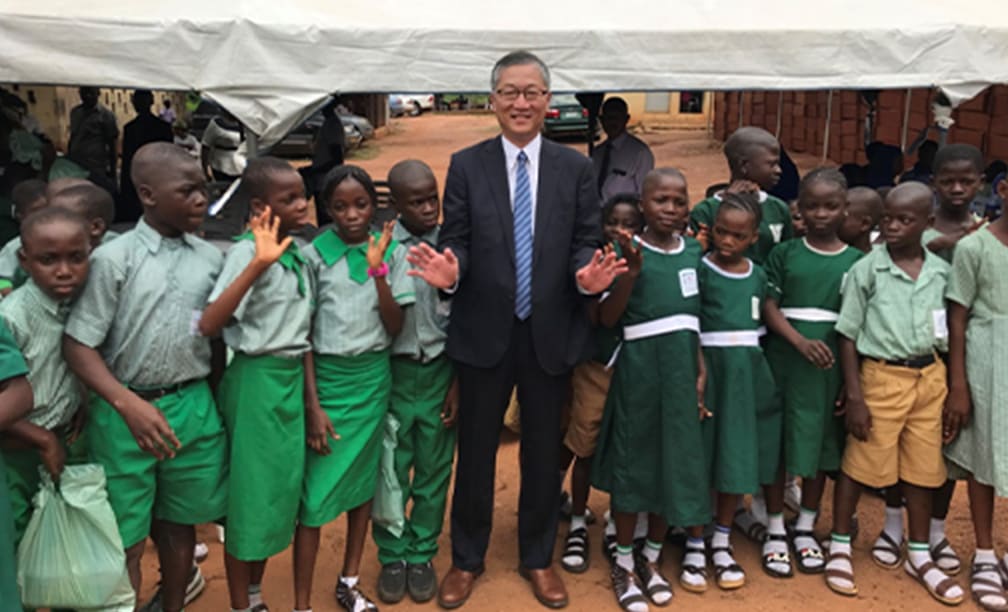
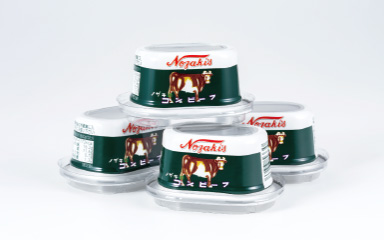
Since 2011, as part of our international contributions, we have donated about 15,000 cans of Kawasho Foods' GEISHA products (mackerel stewed in tomato sauce), a set of study desks, and notebooks of our original design to children in Ghana, Nigeria, to support their "food," "education," and "health.
Regional Contribution|Corporate volunteers for the Kasumigaura Marathon
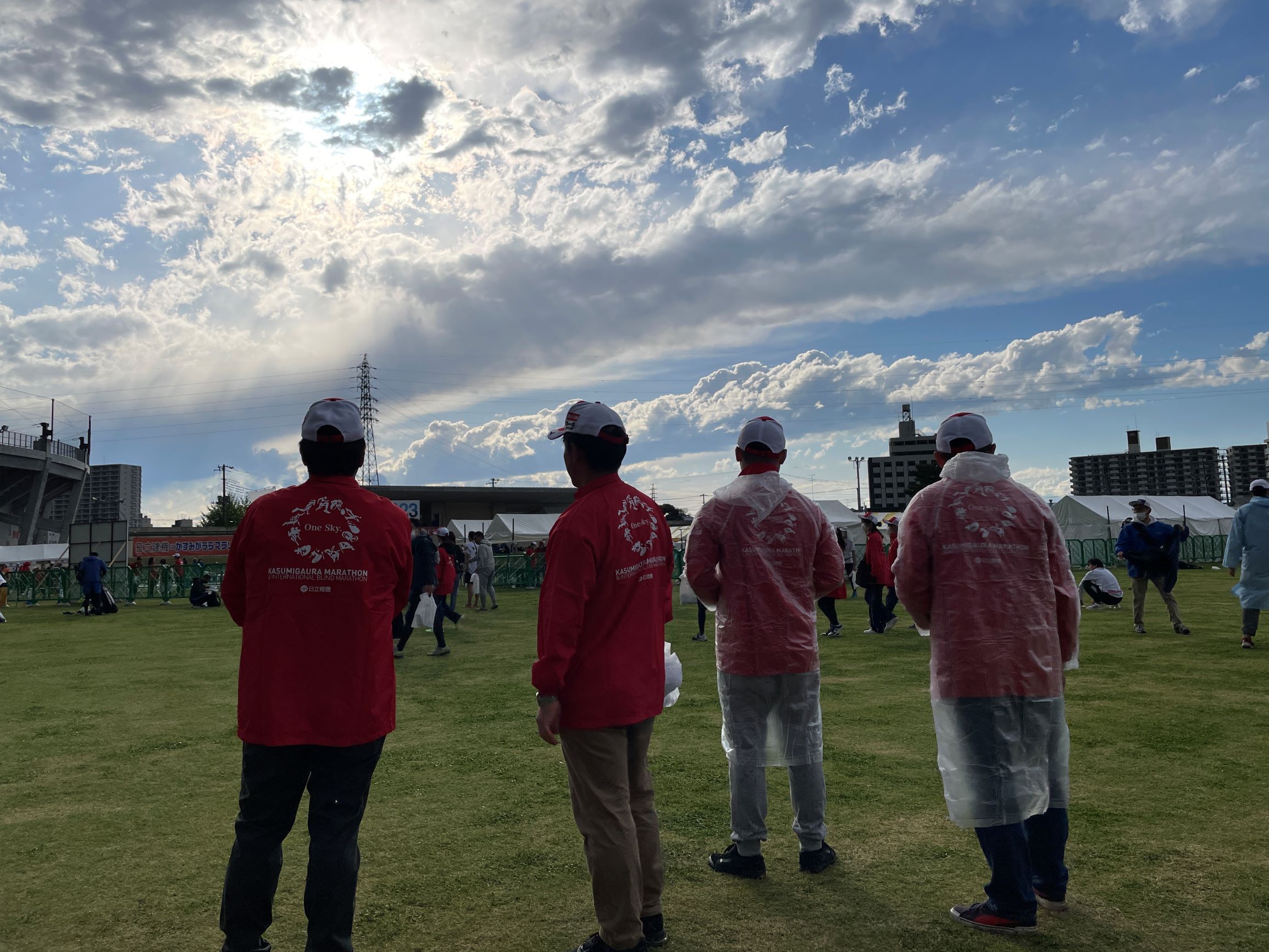
The "Kasumigaura Marathon," sponsored by Tsuchiura City and Kasumigaura City in Ibaraki Prefecture, is one of the largest citizen's marathons in Japan and has been held since 1991. Since our Real Estate Department owns land for sale in Tsuchiura City, we have participated as a corporate volunteer since 2015 as part of our contribution to the local community. (*Not held in 2020 and 2021 due to the impact of Corona)
Social Welfare|Practical sales by students of special needs schools
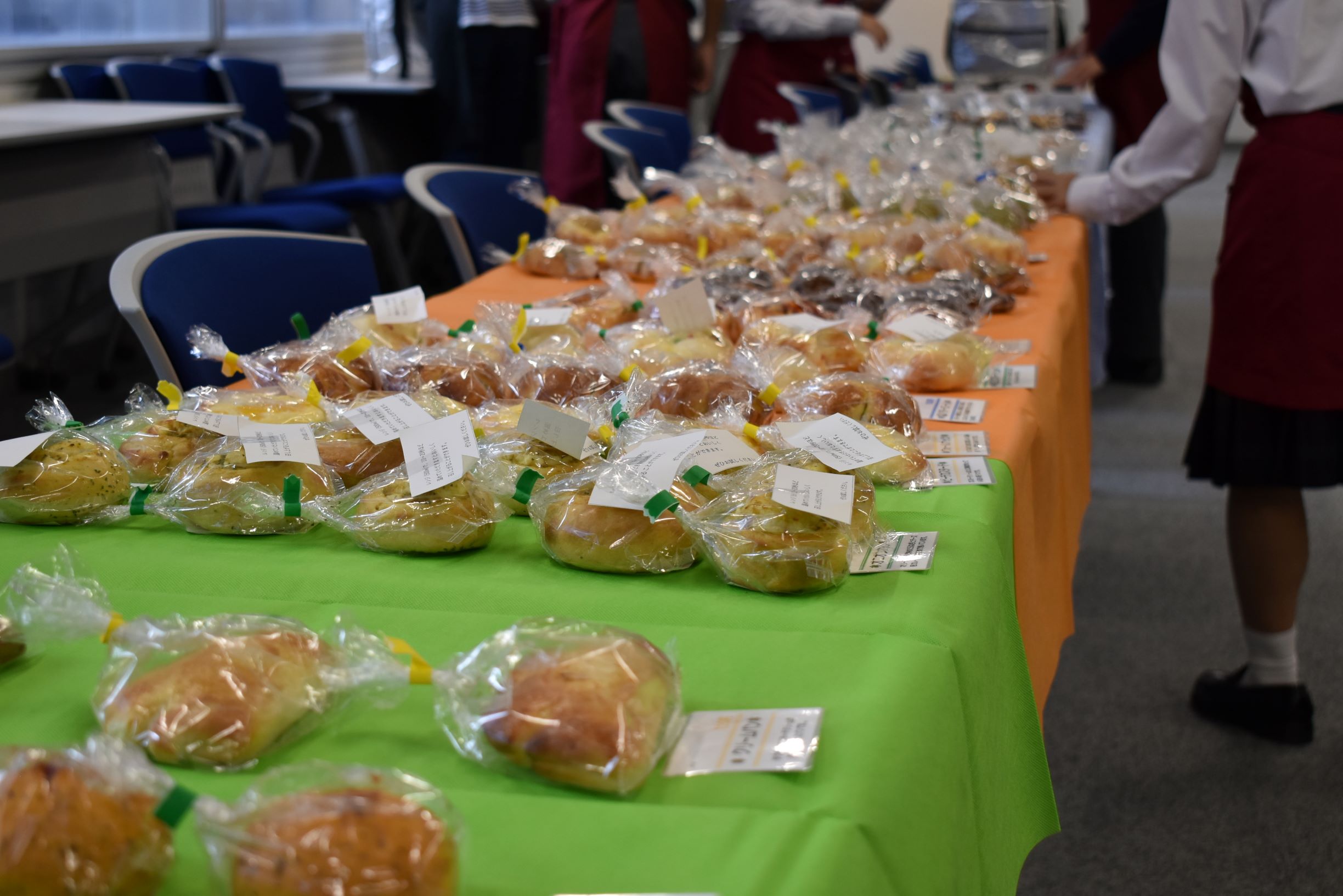
Social contribution activities with special needs schools began in 2017. Among them, we have continued to provide a place to sell bread in-house as part of the students' social studies training since 2021. The students sell the bread they made themselves, and serve customers by working the cash register and packing the bags.
Social Welfare|Providing educational menu for Tokyo Metropolitan Eifuku Gakuen
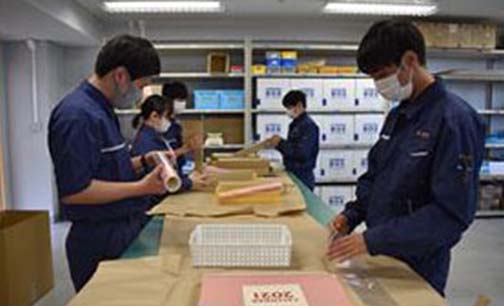
Tokyo Metropolitan Eifuku Gakuen is a special needs school located in Tokyo. It was the first school in Tokyo to offer an upper secondary vocational-technical course for students with mild intellectual disabilities. All students are employed by companies and are trained to contribute to society. The school has a total enrollment of 300 students, with a maximum of 100 students in each grade. Students are placed in one of five courses: clerical work, building cleaning, logistics, food, or welfare, and acquire specialized knowledge and skills through practical learning in a hands-on training room that simulates an employment site. In the Logistics Course, where students study distribution and services, from FY2020, we will provide the students with the opportunity to pack and seal the calendars they produce each year as part of their educational program.